
Rich Thomas Weather Network

WEEKEND Update:  More Dangerous Heat – ERIN Explodes in Intensity

BULLETIN 11:30AM EDT 8/16/25

…AIR FORCE RESERVE HURRICANE HUNTERS FIND ERIN IS NOW A CATASTROPHIC CATEGORY 5 HURRICANE… Reports from an Air Force Reserve Hurricane Hunter aircraft indicate that Erin has become a Category 5 hurricane with maximum sustained winds near 160 mph . The minimum pressure has fallen to near 917 mb (27.08 inches) at 111:30 AM EDT. #ERIN https://nhc.noaa.gov/text/refresh/MIATCUAT5+shtml/161520.shtml?

From the San Juan radar…

BULLETIN: 8AM EDT

…CATEGORY 4 ERIN CONTINUES TO RAPIDLY INTENSIFY…Winds now 145 mph. Pressure 935 mbs. …OUTER RAINBANDS BEGINNING TO AFFECT THE NORTHERN LEEWARD ISLANDS.. https://nhc.noaa.gov/text/refresh/MIATCPAT5+shtml/151446.shtml?

Good morning!  A large heat dome is parked over the central US.  That means fewer storms, more sun and hotter days.  Expect dangerous Heat Indices close to the dangerous 105 range.  Radar is expected to be quite today.  Storms will be few and far between through the weekend.  Dangerous Hot days will continue well into next week.

In the Tropics: Hurricane Erin has exploded in intensity in the last 24 hours.  It is now a major category 3, 120 mph hurricane in the tropical Atlantic and still intensifying.  It’s not out of the question that Erin could come close to Category 5 intensity later today. Although it will miss the Leeward islands and the Greater Antilles, it will have significant wave action and dangerous rip currents.

TODAY:   Dense Fog Advisory until 9am. Sun/cloud mix.  High in the low to mid 90’s.  Heat index as high as 105.   Random only widely scattered showers and storms – most numerous in the after and evening hours. Low tonight mid 70’s.

Early this morning the Dense Fog Advisory has been expanded Westward till 9AM.

That mound of upper level high pressure is in firm control.

A Heat advisory has been issued and covers a multi-state area, including parts of west Alabama.

The Heat Index will be excessive for several days. Dangerous Heat.

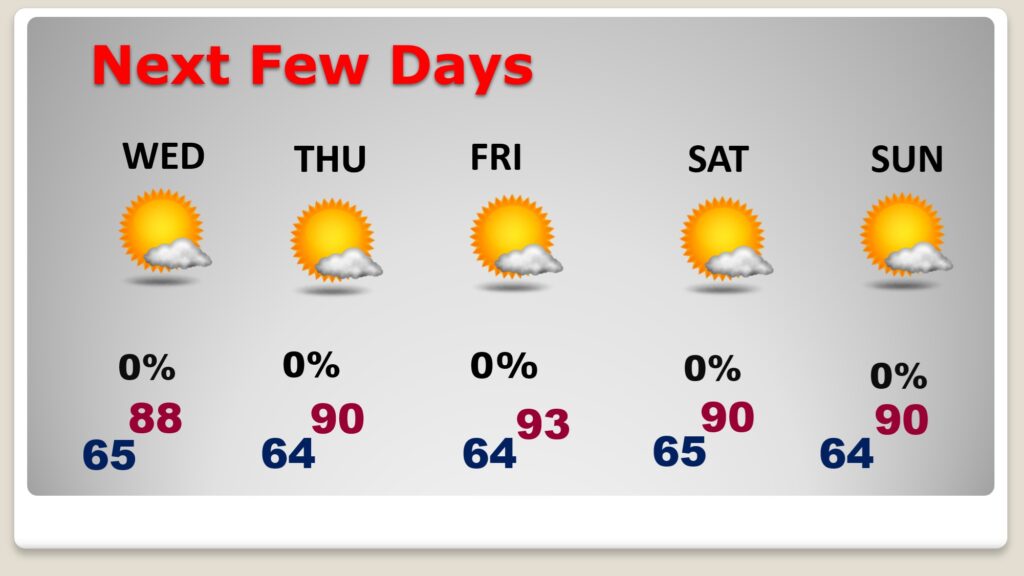
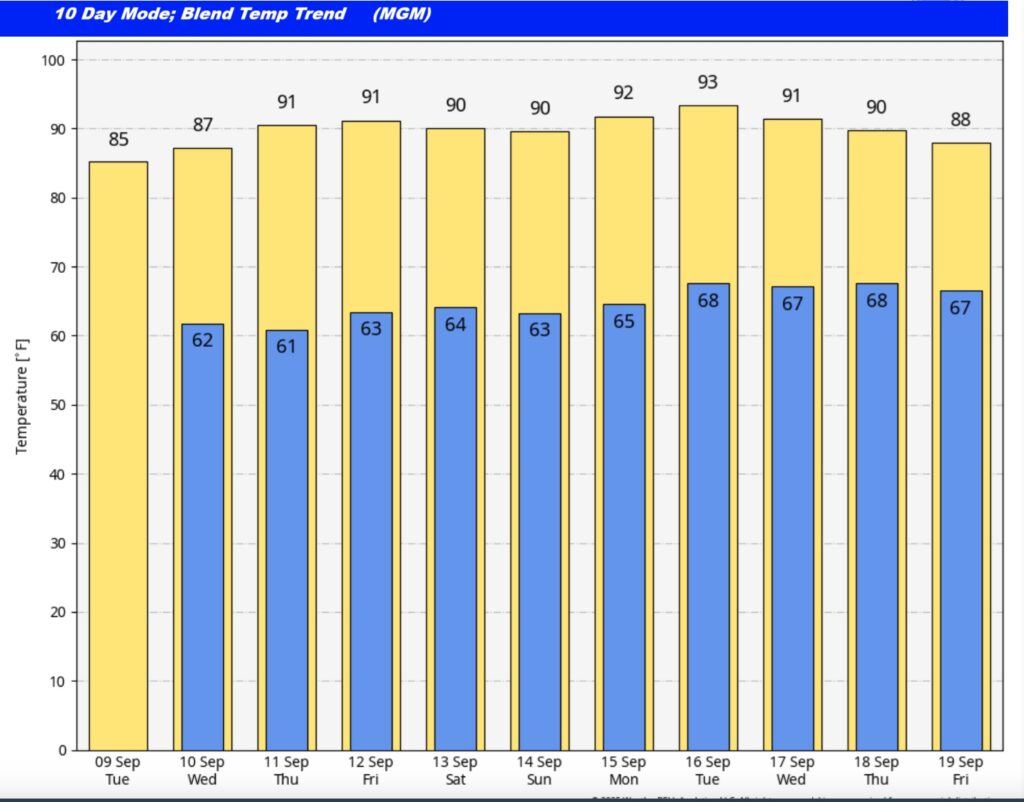
NEXT FEW DAYS:   The number of storms will be very isolated in nature each of the next several day.  With fewer storms and more sun, expect more dangerous hot days. Expect middle 90s Friday through early next week. Expect dangerous Heat Indices close to the dangerous 105 range. 

Here’s the 7 Day Temperature Trend. Dangerous Hot days will continue well into next week.

TROPICAL OUTLOOK:    

Hurricane Erin has exploded in intensity in the last 24 hours.  It is now a major category 3, 120 mph hurricane in the tropical Atlantic and still intensifying.  It’s not out of the question that Erin could come close to Category 5 intensity later today. The center has fallen to 955 mbs. And is still dropping quickly.  It is speeding off to the WNW at 20 mph.  Although it will miss the Leeward islands and the Greater Antilles, it will have significant wave action and dangerous rip currents.

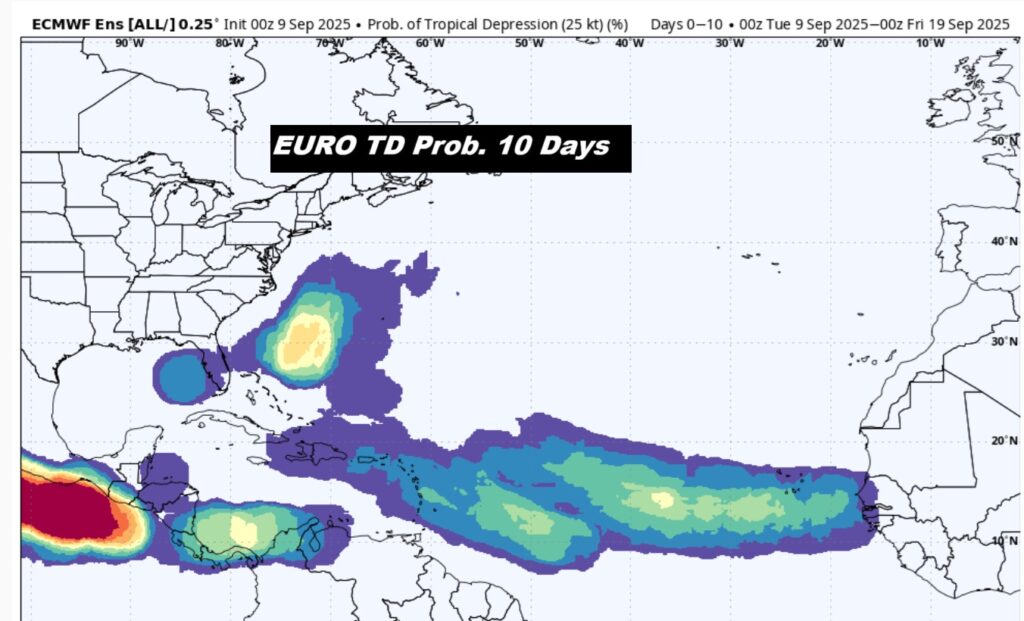
Here’s the EURO Ensembles –all showing Erin will likely miss the US and turn into the open Atlantic.  Significant wave action and rip currents will affect the US East Coast.   

Elsewhere, there is an Area To Watch off the US East Coast.

BEACH OUTLOOK:  Routine August weekend forecast  30% rain probability is quite normal.  A Heat Advisory covers the coastal areas. Moderate Rip Current Risk.

HURRICANE HISTORY: Tomorrow, August 17th, is the anniversary of the 1969 monster Category 5 Hurricane Camille which terrorize the central US Gulf Coast. is one of the most intense, damaging and deadly hurricane to cross the US coastline in history, with winds exceeding 190 mph. It caused widespread destruction, particularly along the Gulf Coast, and resulted in significant loss of life and property damage. The storm later brought torrential rainfall to Virginia and West Virginia, causing severe flooding and landslides.

Key Details about Hurricane Camille:

  • Formation and Intensity: Camille formed west of the Cayman Islands on August 14, 1969, and rapidly intensified over the Gulf of Mexico, reaching Category 5 status on August 16. 

Landfall:

The hurricane made landfall near the Mississippi coast late on August 17th, with the eye passing over Bay St. Louis. 

Winds and Storm Surge:

Camille’s winds were incredibly powerful, with some estimations exceeding 200 mph, and the storm surge reached over 24 feet in some areas, according to Britannica

Rainfall and Flooding:

While the Gulf Coast experienced heavy rainfall, the most significant flooding occurred as the storm moved inland over the Appalachian Mountains, particularly in Virginia and West Virginia. 

Casualties and Damage:

Camille resulted in at least 259 fatalities and caused over $1.421 billion in damage, according to the National Weather Service

Legacy:

Hurricane Camille remains one of the most intense and destructive hurricanes to ever strike the United States, serving as a stark reminder of the power of nature. 

The next scheduled Blog update and Video Discussion is scheduled for Monday morning in the 4 o’clock hour.   Have a nice weekend!  

–Rich